
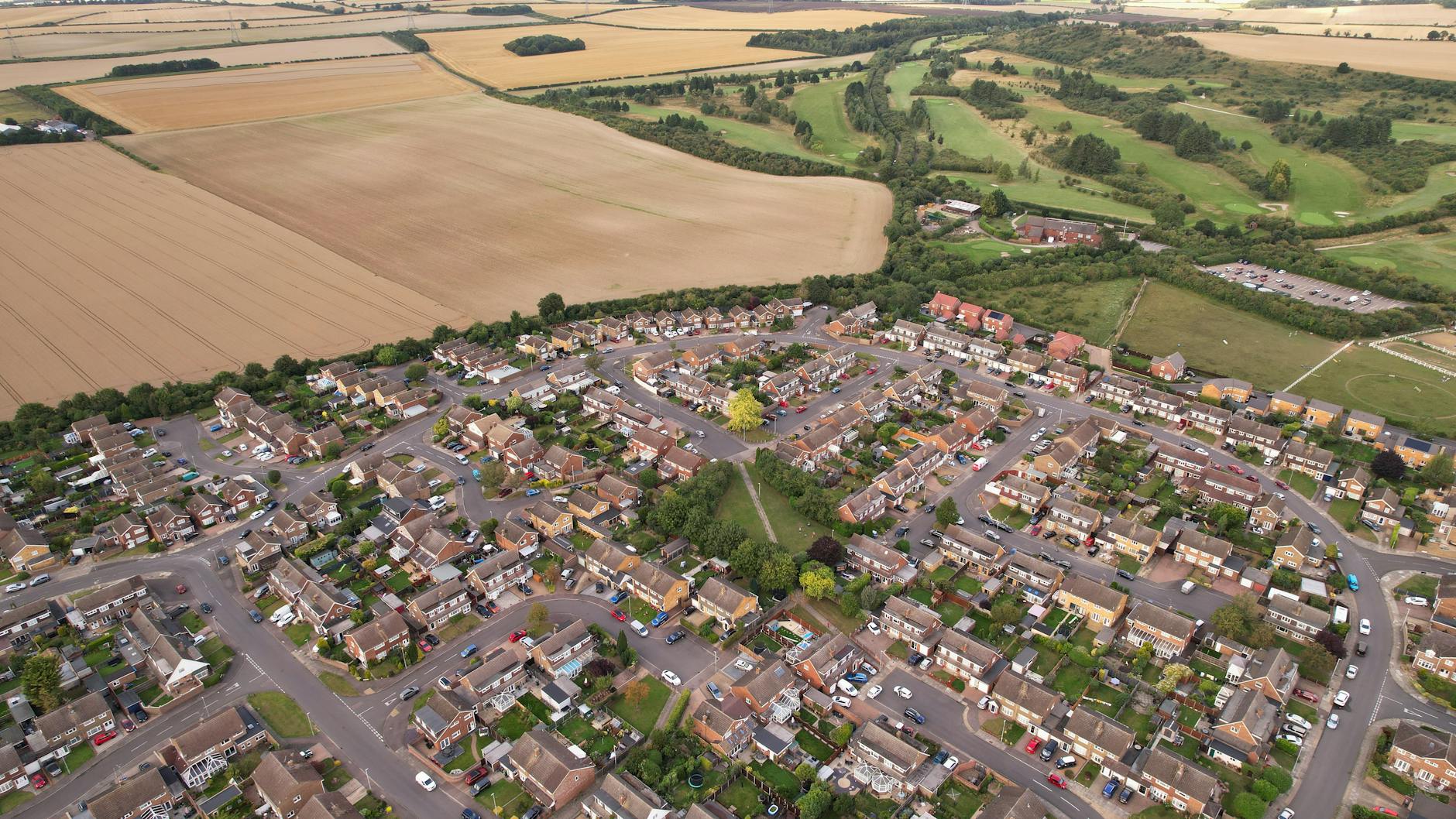
The energy sector knows the UK grid is under pressure. We talk a lot about offshore wind, big transmission lines, and interconnectors. But the most critical visibility gap isn’t miles offshore; it’s on the street outside your home.
That’s where the low-voltage (LV) network lives — the web of local substations and feeders that connect homes, schools, shops, and small businesses. It’s the “last mile” of the electricity system. And right now, it’s also the blind spot of the energy transition.
Why LV Matters
The LV network used to be simple: passive wires taking electricity one way from a substation to customers. Demand was predictable. Planning was slow and steady.
Now it’s anything but. Rooftop solar pushes power back onto feeders. Heat pumps change winter demand patterns. A single EV charger can add 7 kW at home — and faster chargers can draw 11–22 kW. Public rapid DC chargers often demand 50 kW, 150 kW, or more, sometimes even on LV networks.
The challenge isn’t just the growth in demand, but its concentration. Ten EV chargers on the same cul-de-sac can overload a local feeder, even if the wider substation still has capacity. A cluster of rooftop PV panels can cause voltage to swing on sunny days.
This is the scale where Net Zero either works or stalls. And yet it’s the scale where data is weakest.
The Visibility Gap
At higher voltages, data is plentiful. Transmission networks and primary substations are closely monitored. We can see regional demand in real time.
But go down to the street-level LV network, and the picture blurs:
- Sparse monitoring: Most LV feeders have no sensors at all.
- Patchy asset records: In many areas, even feeder topology is incomplete.
- Smart meter data limits: Meters can measure every few seconds, but what’s shared externally is usually half-hourly — too slow for operations.
- Privacy is paramount: Raw smart meter data is rightfully protected. The challenge is creating models and aggregates.
So while significant investment is spent reinforcing or upgrading, developers, local authorities, and community groups are often left guessing whether a given site can take new load.
Why This Matters to Developers
If you’re a property developer, you need to know if that 200-home site can support EV chargers and heat pumps without an expensive grid upgrade.
If you’re a renewables developer, you want to know whether your solar farm or battery project will face curtailment risk.
If you’re rolling out EV charging infrastructure, the business case lives or dies on whether the local feeder can support your chargepoint hub.
And if you’re a local authority writing a Local Area Energy Plan, you need to know where clusters of demand or generation are going to hit first.
Right now, none of these stakeholders get the LV data they need. They submit a connection request, then wait weeks or months for a DNO to respond — often with the answer: sorry, reinforcement required. That uncertainty wastes time, money, and confidence.
What’s Already Available
The good news is, things are changing. Ofgem has encouraged DNOs to adopt a Data Best Practice framework, guiding them to presume data should be open unless there’s a strong reason not to. Under the RIIO-ED2 price control, DNOs are increasingly expected to publish more.
All DNOs now have open data portals, though the quality and completeness vary significantly across regions.
Already, you can find:
- Capacity and headroom maps at primary and secondary substations.
- Generation connection registers listing PV, wind, and battery sites.
- Network asset shapefiles — in some regions, even LV lines and poles.
- Aggregated smart meter data — SSEN recently published half-hourly demand across 84,000 LV feeders, a landmark example of using privacy-protecting aggregation to generate invaluable network insights.
That’s enough to start building prototypes. For example, we can map where substations are nearing their limits, overlay that with demographics and EV adoption data, and start to predict where LV feeders are most likely to struggle next.
Filling the Gaps
But it’s still not enough. The datasets we need most are still locked:
- Feeder load and voltage time-series — so we know what’s happening locally, not just at the substation.
- Queue transparency — who else has already applied to connect, and how much capacity they’ll take.
- Dynamic hosting capacity forecasts — not just static headroom, but how it shifts over time with DER uptake.
- Connection cost and time estimates at specific sites.
- Planned reinforcement schedules — so developers don’t duplicate investments.
These are the “Top 5 Missing Datasets” that would transform how developers, investors, and local authorities plan projects.
How We’re Approaching It
Here’s the path we’re taking:
- Start with open data — mining DNO portals, National Grid ESO, and ONS demographics.
- Model the rest — using state estimation, probabilistic hosting capacity, and synthetic load profiles.
- Prove value with prototypes — early maps and dashboards that show what’s possible even with partial data.
- Engage stakeholders — developers, EV firms, local councils — by asking for feedback and advice.
- Prioritise privacy by design: All methods and models built on aggregated, anonymised, or synthetic data.
This way, we’re not waiting for perfect data. We’re building tools now, showing the benefits, and inviting others to help unlock the rest.
Closing Thought
We often think the energy transition is about technology: turbines, panels, batteries, cables. But increasingly, it’s about data. Without the right data, we can’t build the right infrastructure in the right places, at the right time.
The LV network is the frontline of electrification. It’s where the Net Zero future will either happen smoothly, or get stuck in delays and costs.


